
In the Spotlight
Caroline Mallonee and the 2026 Memphis Composers Institute
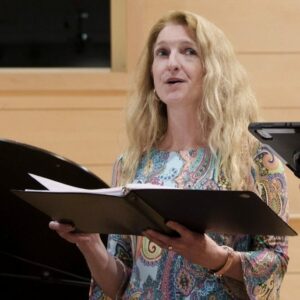 Caroline Mallonee is well known to the Walden community. An alum of both the Young Musicians Program (YMP) and the Teacher Training Institute (TTI), Carrie has served on faculty and staff for many summers at YMP and at Walden’s Creative Musicians Retreat (CMR), a program that she has directed since it was launched in 2011.
Carrie has been deeply involved with the 2026 Memphis Composers Institute (MCI), a partnership between The Walden School, the Memphis Symphony Orchestra, and the Rudi E. Scheidt School of Music of the University of Memphis. Composers in the early stages of their orchestral composing careers were invited to submit an orchestral work for a chance to be performed by the Memphis Symphony. The three selected composers will attend an event in Memphis, from February 1 through 4, 2026, including rehearsals, panel discussions, and a performance of their works by the Memphis Symphony Orchestra conducted by Kyle Dickson, alongside a new work by Mallonee.
As one of the panelists for this year’s MCI, and one of the four composers featured on the February 4 Memphis Symphony Orchestra concert, Carrie gave an interview to speak about her experience with MCI, her upcoming premiere, and her thoughts on the value of mentorship to composers.
Tell us about the new work that you wrote for the Memphis Composers Institute.
It is an orchestration of a work that I originally wrote in 2017 called Curtains of Light. When I wrote the piece, it was for a mixed ensemble. I always thought I should arrange it for orchestra because there are so many different colors in the piece.
When we went to Memphis last year and had this amazing week at the first Memphis Composers Institute, D. J. Sparr [artistic coordinator of the MCI] floated the idea that maybe in 2026 they could do a piece of mine. I was thrilled, because I had this piece that was looking for a place.
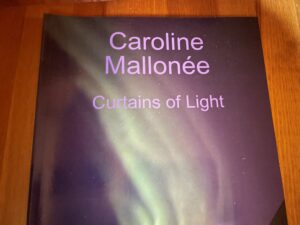 It’s about the Northern Lights. The original piece was commissioned by family friends, Carol and Jim Oleson, who took a trip to see the Northern Lights to celebrate their 50th wedding anniversary. They both sent me written impressions and pictures that they had taken that night. I took their words and their images and turned them into this piece.
I often illustrate scientific concepts in my music. This piece has a movement called “Sol” about the sun, and a movement called “Collisions” for the little particles, and then a movement called “Photons” for when the photons hit and then burst into light. It’s called Curtains of Light because that’s how both Carol and Jim described the Northern Lights, like curtains moving and waving in a breeze.
I have since seen the Northern Lights. When I saw them, I thought, “Oh, this is my piece.”
 How does your piece fit into the program with the three selected works at MCI?
Dede Ondishko’s piece is about birds. It incorporates all these bird songs from South Carolina. There’s a message about climate change and care for the world in her piece. Fulya Kapucugil’s piece is called Leaving the Nest, so there is also a bird connection. The other piece is called Cages of Jade, by Ethan Soledad, which is a pretty evocative title. Certainly, when I’m thinking of my piece, I’m thinking of colors like green and purple. I feel like the program will hold together thematically really well.
Your piece Lakeside Game was premiered by the New York Philharmonic in November. Congratulations! How was that experience?
It was an incredible experience. The musicians are just amazing. They look at a piece of music, and they play what’s on the page—in the best way. All you need to do is tell them what to play, at what time, at what dynamic, and how to phrase it.
I learned so much as I was doing it. It was great to have that whole experience a month before my Memphis deadline. I could go back to my piece for Memphis and make sure the score really said everything I wanted it to say.
Do you write for orchestra frequently?
No. I mean, nobody does, right? And I think that’s kind of the point. It’s actually really hard to come by an orchestral performance. That’s why the Memphis Composers Institute is important for composers. Walden helps facilitate this opportunity for people to write the piece and hear the piece, and for audiences to hear new music; I’m really glad that Walden is able to do that.
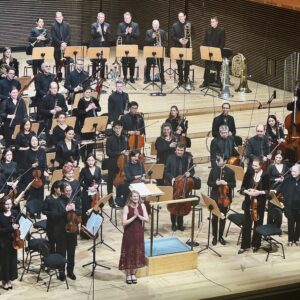
Two of the selected composers are currently in graduate programs for composition. What sort of impact might this opportunity have for composers in such a formative stage of their career?
It’s huge. It’s the chance to hear your piece, feel your piece, and get feedback from the players and from the conductor. At the Memphis Composers Institute, there are five professional composers looking at your score, and you get feedback from them, too. You’re getting a lot of attention!
That’s part of why Walden’s Young Musicians Program (YMP) and Creative Musicians Retreat (CMR) are so amazing, too. People write a piece, they get to hear it, they get feedback, and they get a recording, which they can share and distribute to get future opportunities.
You were a panelist for the 2026 Memphis Composers Institute, so you were one of the people reviewing the scores and deciding who would be selected. What was that experience like?
It’s great. I love seeing what people are writing and what people are saying.
The thing with orchestra is you do have to be practical. You’re asking: Is this compelling? What are they trying to say? Are the instrumentalists going to enjoy playing it? These are the people making the music, and if they’re not invested, it’s not going to be that successful a performance. In a way, you’re writing it for those musicians. That’s what they’re doing for 10 minutes; they’re playing these things in this order. So, you had better make it a good experience for them.
What do you see as the value of mentorship to composers?
I think mentorship is really important.
Knowing what other people think is great, whether or not you agree with them. You love your music, but if somebody critiques it, then it makes you look at it in a different way. You can learn from that.
That’s why Composers Forums at Walden are so great, because you get a lot of feedback. Somebody mentions something, and then you store that for next time. Oh, I did that, and at least one person noticed and thought it was good, and then you take that with you.
How did your mentors impact you as an emerging composer?
I started writing music when I was nine, so I have had a lot of teachers and mentors along the way! My teachers were all very different. They all had different things to critique in my pieces, and different things to compliment. I think I took both of those with me: what works, what doesn’t work.
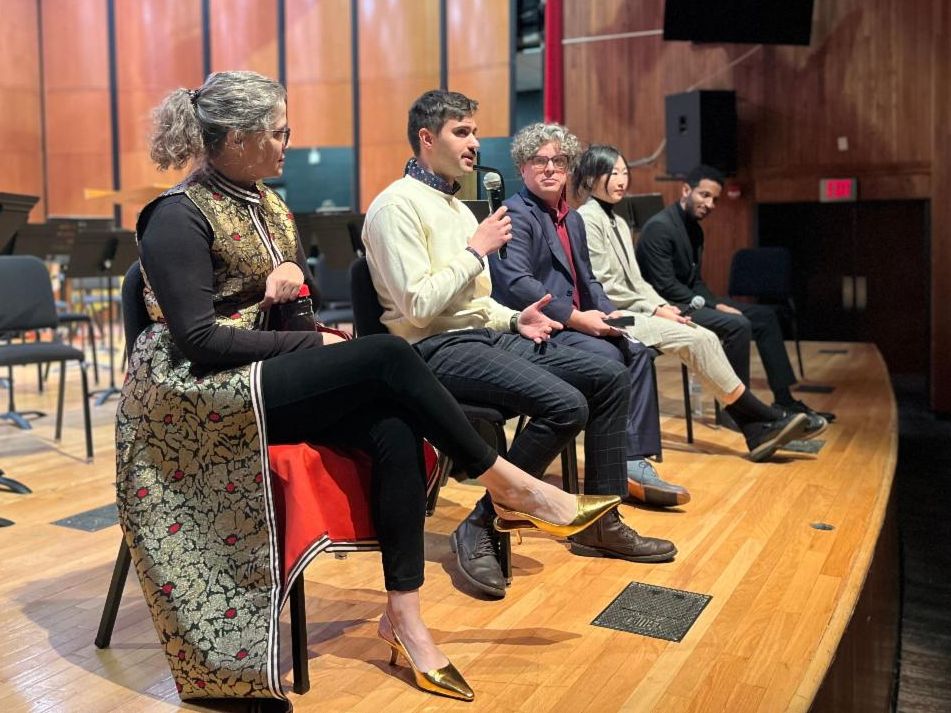
Is there anything else you’d like to share about the MCI experience?
I’m really, really excited to go to Memphis. It was so fun to make it bigger this year, and last year was such a success. I felt like the pieces were performed so well, and the discussions were interesting.
We formed a community, and I think it proves that we can do Walden-y things outside of the summer. We can go places and do Walden and spread Walden. And I’m all for it. I want to spread Walden all the time, because there’s something really special here.